Larissa Jennings
Mayo-Wilson, PhD MHS
I am an Associate Professor with tenure in the Department of Health Behavior at the University of North Carolina Gillings School of Global Public Health. I am a sexual and reproductive health behavioral scientist with methodological skills in epidemiology, biostatistics, and qualitative science.
My research focuses on how to improve sexual and reproductive health (SRH), including HIV, in adolescents and young adults with low economic status and unmet SRH needs. I do this through three main areas of research.
One, I use quantitative randomized behavioral clinical trials to design and evaluate economic and environmental interventions to improve SRH outcomes, including HIV and other sexually transmitted infections (STI). My work investigates how to relieve poverty in urban and rural areas, such that people can achieve their health-related goals.This includes interventions involving employment, work, income, resources, savings, vouchers, or financial incentives. Through intervention effectiveness research, I also study the mechanisms that link these factors to beneficial or adverse SRH/HIV outcomes.
Second, my research studies how economic and environmental factors - such as economic violence, paid leave policies, or built and virtual health care settings - affect SRH/HIV care-seeking and related outcomes. I am also interested in how undergoing SRH care therapies impacts economic outcomes for women and children. I examine these questions using quantitative data from nationally-representative population surveys, qualitative interviews, and social media data.
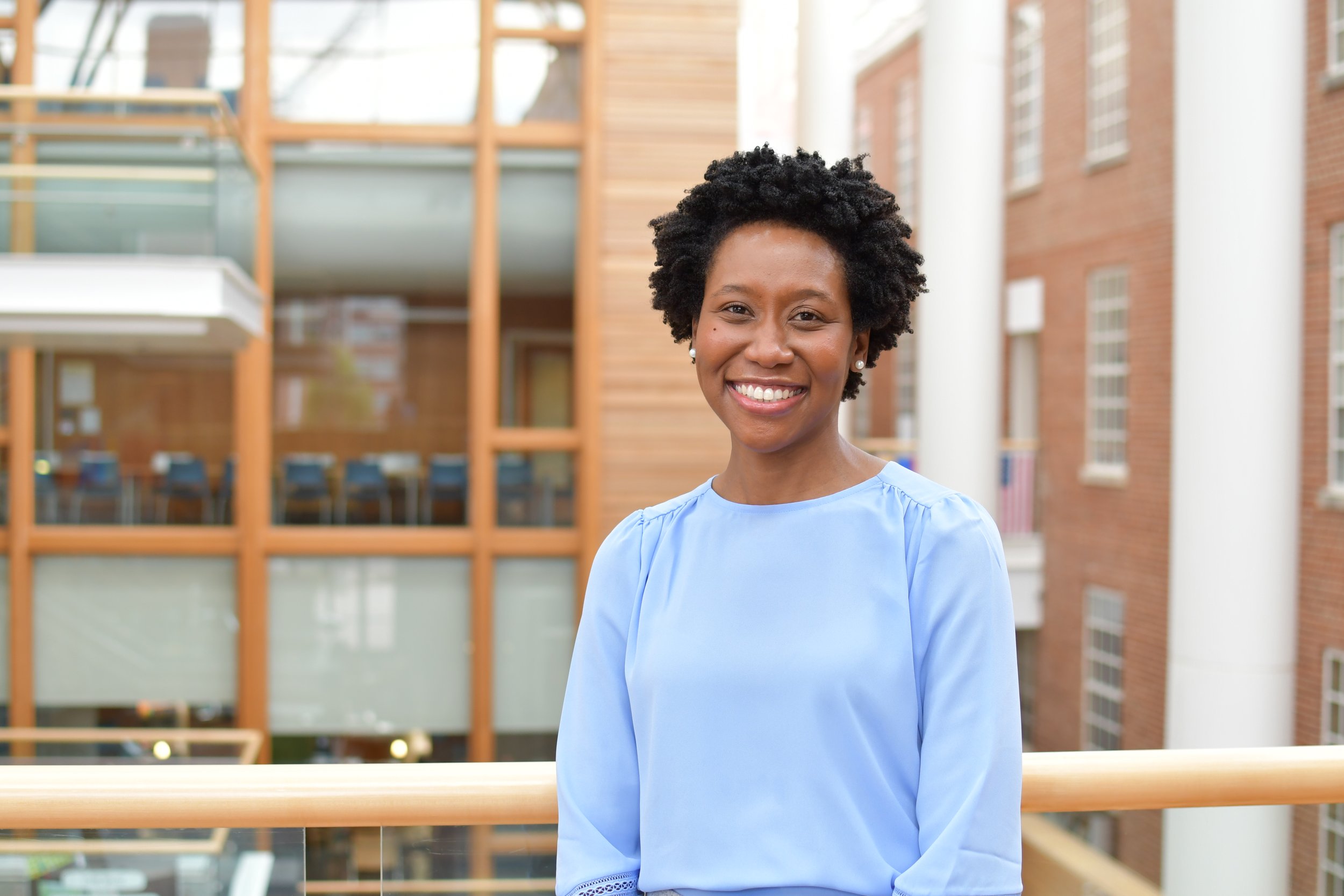
Third, my research examines how self-care approaches enhance or minimize access to SRH/HIV services in communities with high poverty rates and low access to care. I am particularly interested in STI self-testing, fertility self-injection, pregnancy monitoring, and HIV prophylactic and therapeutic self-medication (PrEP/ART). As part of this work, I the founder and director of the Health and Economic Advancement Lab (HEAL) at UNC. In addition, I am a faculty fellow at the UNC Carolina Population Center, a research fellow at the UNC Cecil G. Sheps Center for Health Services Research, an Affiliate at the UNC Carolina Center for Healthy Work Design and Worker Well-Being, and an Adjunct Associate Professor at the UNC School of Medicine, Department of Obstetrics and Gynecology. Additionally, I am the Director of Professional Development in the Department of Health Behavior at UNC, and I serve on the faculty leadership team for two NIH-funded T32 pre-doctoral and post-doctoral training programs at UNC, including a health sciences research program and biosocial sciences program, respectively.
Research


Education and employment support for HIV prevention in young adults (ENSPIRE) (Role: PI, NIH R01)
Objective: To evaluate the effectiveness of a combination intervention providing education, employment support, resources, and mentoring on uptake of HIV prevention medication and behaviors in U.S. young adults. This study uses a mixed methods randomized clinical trial design.
Addressing care and health in experiences of in vitro fertilization (ACHIEVE). (Role: PI, NIH CPC P2 Sub-Study)
Objective: To examine women’s perceptions of IVF patient care experiences in fertility clinics and broader household, workplace, and community settings. This study assesses economic, mental, and physical health experiences uses a 1st phase qualitative longitudinal design followed by a 2nd phase of intervention development with patient feedback.
Adaptations in adolescent HIV care in response to financial gaps and constraints (ALIGN) (Role: PI, NIH ATN UM2 Sub-Study)
Objective: To qualitatively examine how adolescent-serving providers of antiretroviral therapy (ART) and pre-exposure prophylaxis (PrEP) medications have modified patient care in response to recent funding changes in the U.S. and what they perceive as successes and challenges of those care adaptations in 5 ATN-supported states, including New York, Maryland, Florida, Louisiana, and California.
Work and wellness for rural and underserved U.S. families (WELLFUL) (Role: PI, Gillings Pivot Award)
Objective: To examine how non-standard work arrangements, including unstable employment (e.g., gig, seasonal, contract) affects care-seeking for health and wellness among precariously employed adults in rural and underserved counties in North Carolina using a population survey design. Three care domains are targeted: sexual and reproductive health, mental health, and substance use health.
Creating access to resources and economic support (CARES) to mitigate pandemic-related psychological distress (Role: Co-I, NIH R01)
Objective: To assess the efficacy of a peer-mentoring and micro-grant intervention in reducing economic and mental health harms among pandemic-affected people in the U.S. This study uses a mixed-methods randomized clinical trial design. Currently conducting post-study analyses.
Adolescent medicine trials network (ATN) for HIV and AIDS interventions: senior leadership group (SLG) (Role: Co-I, NIH UM2)
Objective: To characterize the role of institutions, organizations, and policies (IOP) in reducing new HIV infections and in improving the HIV care continuum in U.S. adolescents and young adults. IOP-SLG uses ATN clinical trial data in several U.S. metropolitan areas.
Incentives and reminders to improve long-term medication adherence (INMIND Study) (Role: Co-I, NIH R01)
Objective: To identify optimal sequencing from low-resource messages to higher-resource prizes to successfully routinize antiretroviral therapy (ART) and achieve viral suppression in Uganda adults. This study uses a mixed methods randomized clinical trial design.
Strengthening community responses to economic vulnerability and HIV inequities (SeCuRE) (Role: Co-PI, NIH, R34)
Objective: To examine the feasibility and acceptability of a micro-economic intervention to support U.S. women with low economic status to increase employment acquisition and reduce HIV risk. This study uses a feasibility randomized trial design. Currently conducting post-study analyses.
Combined HIV services and microenterprise for equitable and sustained recovery (CHIMES) intervention (Role: Co-I, Gilead Sciences, Inc.)
Objective: To examine the feasibility and acceptability of a combined intervention to achieve remission among individuals who are living with HIV and receiving substance use disorder treatment within sober houses in Tanzania. This study pilots several intervention and study processes.
Key Words
Sexual and Reproductive Health
Economic Justice
Economic and Environmental Interventions
Maternal Health
HIV and Other STIs
Fertility Care
Community Engagement
Randomized Behavioral Clinical Trials
Qualitative Research
Self-Care Interventions
Behavioral Economics
Adolescents and Young Adults
Populations Experiencing Poverty and Low Access to Care

Advising
I advise PhD and MPH students in the UNC Department of Health Behavior and the UNC Department of Maternal and Child Health. I also advise pre-doctoral and post-doctoral fellows at the UNC Sheps Center for Health Services Research and UNC Carolina Population Center. All of my advisees have an opportunity to work within my lab, the Health and Economic Advancement Lab (HEAL) at UNC.
Students and fellows who are interested in addressing economic and structural factors relating to health or working with children and families with low economic status are welcome to note my name in their program application.
Service
I welcome invitations for service opportunities within organizations committed to health and economic justice locally and abroad.
Current
Advisor, National Working Positive Coalition (NWPC)
Advisor, Guaranteed Income & Health Consortium (GIHC)
Associate Editor, Patient-Centered Outcomes Research Institute (PCORI)
Director, Professional Development (UNC, HB)
Advisor, UNC Carolina Population Center (CPC) Executive Advisory Council
Former
Chair, HIV/AIDS Research Program Review Panel: Economic Justice Interventions (CHRP)
Board Member, Nursing Network on Violence Against Women International (NNVAWI)
Board Member, One House at a Time (OHAAT)
Board Member, Community Systems Foundation (CSF)
Founder and Executive Director, My Own Tutor, LLC
Advisor, Gillings Research Strategic Plan Implementation Committee
Publications
Full List of Publications on PubMed
N = 95 peer-reviewed publications
- 26% clinical trials
- 35% observational studies
- 26% qualitative research
- 13% guidance and reviews
n = 29 first-author publications
n = 40 publications with students
4,000+ citations per Google Scholar
